
How a Community College Prevented $425K+ in Fraud and Aligned with New Federal Identity Verification Standards

Identity fraud in federal student aid is a growing national concern. Federal leadership has made clear that stronger identity validation measures are no longer optional. They are necessary to protect students, institutions, and taxpayers.

“When rampant fraud is taking aid away from eligible students, disrupting the operations of colleges, and ripping off taxpayers, we have a responsibility to act. Today’s actions will implement temporary changes to the current verification process to prevent identity theft fraud. We will continue to build longer-term solutions that reduce the administrative burden on institutions and protect American taxpayers who underwrite federal student aid programs.”

Across the U.S., higher education institutions are dealing with an alarming upswing in financial aid fraud. Scammers are using artificial intelligence to steal identities and submit fraudulent financial aid applications that result in millions of dollars in lost federal and state funding. In 2024, California community colleges found that nearly one-third of all applications were fraudulent and cost the system approximately $13 million in lost state and federal funds. Nationally, over the past five years the federal government has investigated more than $350 million in fraud perpetrated by “ghost student” schemes — and more than 200 investigations remain open as authorities work to understand the full scope of the problem.

Fraudsters are now exploiting AI to generate synthetic student identities at scale, then flooding financial aid portals with thousands of applications from these so-called “ghost students.” California Community Colleges detected nearly 80,000 applications from ghost students in 2024, while other states including Arizona, Indiana, Oregon, New Jersey, and Michigan encountered similar threats.

In response to the rapidly evolving threat landscape, one large community college prioritized upgrading its identity verification process.

By adopting a digital identity proofing solution compliant with NIST Identity Assurance Level 2 (IAL2) standards, the institution strengthened fraud defenses while significantly reducing operational strain.

Serving a large, open-access population requires an identity solution that is secure, scalable, and student-friendly.

Following implementation:

  • 11,135 students verified at the IAL2 level
  • High-assurance identity proofing deployed across a diverse student population
  • Federally compliant standards applied consistently and efficiently

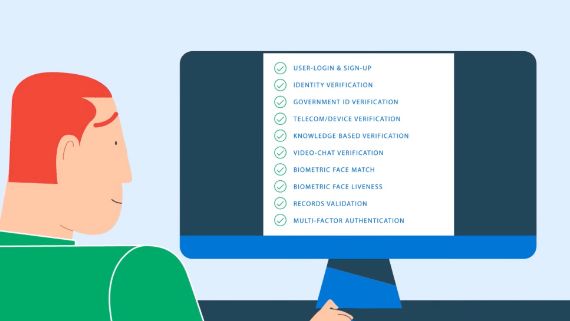
With ID.me, students are first guided through a self-service identity proofing flow, which serves as the primary and fastest verification pathway. Most students complete this process independently in minutes by securely uploading documentation and completing automated checks.

Students who cannot complete self-service verification have access to live video chat with a trained ID.me Trusted Referee. This ensures eligible students are not blocked from receiving aid while maintaining strong proof-of-presence standards. The combination of automation and human review strengthens fraud protection without increasing institutional burden.

The financial impact was immediate during the first four weeks of the Spring 2026 semester.

Within that initial period:

  • $425,535 in estimated fraud prevented
    • $244,035 in Pell Grants protected
    • $181,500 in federal student loans protected

By verifying identities before disbursement, fraudulent applications, including ghost student schemes, were stopped early in the term when aid is most vulnerable. This protected federal funds and preserved resources for legitimate students.

Recent U.S. Department of Education guidance emphasizes stronger identity verification measures to combat Title IV fraud, including the use of live video verification when in-person verification is not possible. ⁴

ID.me’s model aligns with this direction by offering:

  • Self-service digital identity proofing as the first option
  • Live video chat as a secure, compliant alternative
  • Elimination of mailed paperwork and notarization delays
  • Stronger proof-of-presence protections against identity theft

This layered approach answers the Secretary’s call for solutions that both prevent fraud and reduce administrative burden by strengthening identity verification without adding unnecessary complexity. At the same time, it reduces time and costs for students and institutions while increasing confidence that financial aid is reaching legitimate recipients.

Prior to implementation, identity verification relied heavily on manual, paper-based processes that strained staff capacity and delayed aid distribution.

After deploying ID.me:

  • Verification time reduced to approximately 4 minutes per student
  • More than 90 percent reduction in paper-based processing
  • Significant decreases in call volume and follow-up work
  • Dramatically lower administrative burden for financial aid staff

By shifting identity proofing to a digital-first, self-service model supported by video chat when needed, the institution reduced operational friction while strengthening compliance.

For Fiscal Year 2025 to 2026, the institution will deliver more than $84.9 million in financial aid.

With high-assurance digital identity proofing in place, aid distribution became faster, more compliant, and more secure. Leadership gained increased confidence that funds were reaching legitimate students while maintaining audit readiness and meeting evolving federal expectations.

This institution’s experience demonstrates how a layered identity verification approach can:

  • Protect federal aid programs
  • Prevent ghost student fraud
  • Reduce administrative workload
  • Improve the student experience
  • Strengthen compliance with federal guidance

By implementing IAL2-level digital identity proofing, with self-service as the primary pathway and video chat as a secure support option, the college built a more resilient financial aid process that safeguards funding while better serving students.

As fraud tactics continue to evolve, institutions that modernize identity verification are not just improving efficiency. They are protecting students, safeguarding taxpayer dollars, and strengthening the integrity of the federal student aid system.

This is no longer optional. It is essential.

Request a Demo of ID.me

See Our Identity Verification Technology in Action

Schedule a consultation with one of our experts to see a demo of ID.me and discuss how we can help reduce fraud and take friction out of your customer experience.

ID.me helps hundreds of companies solve their toughest identity challenges for applications like:

  • Government citizen portals
  • Healthcare eRx & patient portals
  • Bank account opening,
    KYC and e-commerce sites
  • and dozens more we can’t wait to tell you about.

Fill out the form below and someone from our team will be in touch.