
If you’ve recently tried to access your VA benefits, Social Security account, or IRS records online, you may have been asked to verify your identity through a service called ID.me. For many older Americans, this request can feel unexpected, even unsettling. Why is this required? What is ID.me doing with my personal information? How can I be sure my information is safe?
These are all great questions. This guide walks you through exactly what identity verification is, why government agencies now require it, and how your personal information is protected.
What Is Identity Verification, and What Actually Happens When You Use ID.me?
Identity verification is the process of establishing with a high degree of confidence that someone is who they say they are. ID.me verifies your identity to a high level of assurance, as determined by guidelines set by the National Institute of Standards and Technology, or NIST. The Office of Management and Budget (OMB) requires federal agencies to abide by these NIST guidelines for identity verification.
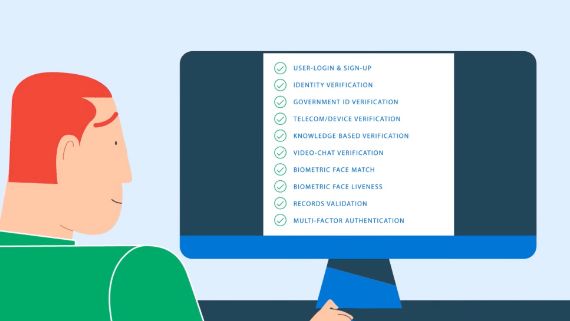
Verifying your identity using ID.me is similar to showing your ID at a government office window. The main difference is that you’re completing the identity verification process through a secure website or mobile app. Here’s what actually happens when you verify your identity through ID.me:
- You enter basic personal information: your name, address, date of birth, and Social Security number.
- You upload a photo of a government-issued ID: such as a driver’s license, state ID, or passport.
- You take a selfie or short video: this allows us to compare the ID documents to the person claiming an identity, either through the use of biometrics or a physical comparison over video chat.
- Your information is checked against trusted records: security systems verify that your ID is genuine and that the details match.
- If needed, a real person can help: if anything is unclear, you can speak face-to-face with a live ID.me agent over a video call.
This process exists for one reason: to make sure nobody else can access your benefits or records by pretending to be you.
Why Do Government Agencies Now Require This?
For decades, accessing government benefits meant visiting an office, showing your ID in person, and speaking with a real person behind a desk. That system worked because it was easy to confirm who you were face-to-face.
As more services have moved online, that in-person safeguard disappeared, and criminals have taken notice.
Identity theft and benefit fraud have increased significantly in recent years — totaling more than $12.5 billion in losses in 2024, according to the Federal Trade Commission. Criminals attempt to log into accounts that aren’t theirs in order to:
- Redirect VA disability or pension payments to a different bank account
- Change Social Security direct deposit information
- File fraudulent tax returns to steal refunds
- Access personal records to open credit cards or loans in someone else’s name
When this happens, it can take months, sometimes even years, for a fraud victim to recover.
Identity verification is one of the most effective tools available to protect the benefits that are rightfully yours.
How Does ID.me Keep My Information Safe?
It’s completely reasonable to feel cautious about sharing personal information, especially a photo ID, with an online service. Here is exactly how ID.me handles what you share with us.
ID.me does not sell your information.
ID.me does not sell your personal data to advertisers, marketing companies, or any third party. Your information is used for one purpose only: confirming your identity so you can access the service you’re trying to reach. For more information about how ID.me handles your personal information, please review our Privacy Policy.
Your information is shared only where you authorize it.
When you verify your identity with ID.me to access an agency like the IRS, VA, or SSA, ID.me shares your verified identity information with that agency so they can match you to their records. You choose which agencies to connect with, and you can review or manage those connections anytime by logging into your ID.me account at account.id.me. You can also revoke access at any time, so that ID.me won’t share your information with those agencies without you providing your consent again.
Your data is protected by multiple layers of security.
ID.me protects your information using federal government security standards, including encryption of your data both in transit and at rest. Systems are continuously monitored for suspicious activity. ID.me participates in regular reviews from cybersecurity certification bodies to ensure our methods are in-line with the latest industry best practices.
Real human help is always available.
During the process, ID.me provides four layers of human fallbacks: human-in-the-loop reviews, video chat verification, in-person verification, and 24/7 US-based help desk. If an individual is unable to meet the NIST requirements via our self-service pathway, they will be routed to engage directly with a trained ID.me agent via live video call. In-person verification options are also available in many areas. Guided by its commitment to “No Identity Left Behind,” ID.me works to provide multiple verification pathways to support its users.
You’ve Earned These Benefits. ID.me Helps Make Sure They Stay Yours
Identity verification may feel like an unfamiliar new step, but its purpose is straightforward: to make sure your benefits, your records, and your personal information stay in your hands and your hands only.
You’ve spent a lifetime earning these benefits. The last thing anyone should be able to do is take them from you by pretending to be you online.
If you need help completing your ID.me verification, support is available.
- Visit the ID.me Help Center for step-by-step guides
- Use the Virtual Assistant to get quick answers (bottom right of the screen)
- Request a live video call with a trained agent
No one should have to navigate this alone, and with ID.me, you don’t have to.